
If your dog has suddenly started shaking their head, scratching at their ears, or rubbing the side of their face against the couch, you are probably already wondering what causes ear infections in dogs and whether this is something that needs a vet visit or will simply pass on its own. It is one of the more common reasons dogs are brought in for an exam, and for good reason: dog ears create an environment that can make infection surprisingly easy to develop.
The good news is that most ear infections respond well to treatment once the underlying cause is identified, but they rarely resolve completely without some help. Left alone, an irritated ear tends to become more painful and more difficult to treat, especially if the infection works its way deeper into the ear canal.
This guide covers what actually causes ear infections in dogs, how to recognize dog ear infection symptoms, how these infections are diagnosed and treated, and when it is time to bring your dog in to be seen.
Understanding what is happening inside your dog’s ear can also make the visit itself feel less confusing, since you will already have a sense of what your veterinarian is checking for and why.
Ear infections are also one of those conditions where a little bit of background knowledge goes a long way. Once you understand why the ear canal becomes vulnerable in the first place, the whole process of prevention and treatment tends to make a lot more sense.
What Causes Ear Infections in Dogs
A dog’s ear canal is shaped differently than a person’s, running vertically before turning at an angle, which makes it easier for moisture, debris, and yeast or bacteria to become trapped rather than draining out naturally. Once that environment sets in, an infection can develop fairly quickly.
In most cases, an ear infection is not really its own standalone problem so much as a sign that something else is creating the right conditions for yeast or bacteria to take hold. Identifying that underlying factor is often just as important as treating the infection itself, especially for dogs who seem to develop ear problems again and again.
Allergies as an Underlying Trigger
Environmental and food allergies are one of the most common underlying reasons a dog develops recurring ear infections, since allergic skin inflammation often extends into the ear canal itself. Dogs who show other signs of allergies, such as itchy paws or a generally irritated coat, are often the same dogs who end up with chronic or repeated ear issues.
Seasonal allergies can make this pattern especially noticeable, with some dogs developing ear flare-ups at roughly the same time each year as pollen or other environmental triggers become more present. Food allergies tend to cause a steadier, year-round pattern of irritation instead, which is one of several clues a veterinarian may use to help narrow down the underlying cause.
Moisture Trapped in the Ear Canal
Dogs who swim often or who have particularly hairy or floppy ears are more prone to trapped moisture, which creates an ideal environment for yeast and bacteria to multiply. Even routine bathing can occasionally contribute if water gets into the ear canal and is not fully dried afterward.
Humid weather adds another layer to this risk, since moisture in the air alone can be enough to keep an already vulnerable ear canal from fully drying out between baths or swims. Dogs with heavy fur around the ear opening sometimes benefit from gentle trimming to help improve airflow, particularly during warmer, more humid months.
Ear Anatomy and Breed Predisposition
Breeds with long, floppy ears or narrow ear canals tend to have less natural airflow, which makes them more prone to infection than breeds with upright ears and more open canals. This does not mean other breeds are immune, only that certain dogs may need more consistent ear care to stay ahead of potential problems.
Dogs with excess hair growing inside the ear canal itself face a similar challenge, since that hair can trap moisture and debris in much the same way floppy ears do. For these dogs, routine ear checks as part of regular grooming or veterinary visits often catch small issues before they turn into a full infection.
Yeast and Bacterial Overgrowth
A healthy ear canal maintains a natural balance of yeast and bacteria, but once that balance is disrupted, whether by allergies, moisture, or another underlying issue, one organism can multiply out of control. A dog ear yeast infection tends to produce a distinct, somewhat musty odor, while bacterial infections may look and smell a little different, which is one reason a veterinary exam is so useful for identifying exactly what is going on.
It is also possible for a dog to develop both a yeast and a bacterial infection in the same ear at the same time, particularly if the underlying trigger, such as allergies, has been present for a while without treatment. These combination infections tend to be more uncomfortable for a dog and can take a bit longer to fully resolve, which is another reason catching an ear problem early tends to make the whole process easier.
Recognizing Dog Ear Infection Symptoms
Knowing how to tell if a dog has an ear infection often comes down to noticing a combination of physical and behavioral changes rather than one single obvious sign.
Physical Signs
- Redness or swelling inside the ear flap or ear canal is often one of the earliest visible signs of irritation.
- A dark discharge or noticeably waxy buildup can indicate that yeast or bacteria have begun to multiply inside the canal.
- An unpleasant odor coming from the ear, even from a short distance away, is a common and fairly reliable sign of infection.
- Scabbing or hair loss around the base of the ear can develop from repeated scratching or rubbing.
Behavioral Signs
- Frequent head shaking, especially when it seems to come out of nowhere, often points to ear discomfort.
- Scratching at one or both ears more than usual, sometimes to the point of causing additional irritation, is a common early sign.
- Rubbing the side of the face or head against furniture, carpet, or a person’s leg can be a dog’s way of relieving itching or pressure.
- A dog may tilt their head to one side or seem generally more sensitive when that side of the head is touched.
Any single sign here could point to something other than an ear infection, which is exactly why a veterinary exam matters before starting treatment at home. A dog showing several of these signs together, especially any odor or discharge, is a stronger reason to schedule a visit soon rather than waiting.
It can also help to get in the habit of gently checking your dog’s ears every so often, even when nothing seems wrong, simply so you have a sense of what is normal for your particular dog. That baseline makes it much easier to notice small changes before they become a bigger, more uncomfortable problem.
Types of Ear Infections in Dogs at a Glance
| Type | Common Signs | Typical Cause |
| Yeast infection | Musty odor, brown or waxy discharge, frequent scratching | Trapped moisture, allergies, or a disrupted natural balance in the ear |
| Bacterial infection | Redness, swelling, yellow or greenish discharge, pain when touched | Bacterial overgrowth, often secondary to allergies or an untreated yeast infection |
| Combination infection | A mix of the signs above, sometimes more severe or longer lasting | Both yeast and bacteria present at once, often in a chronic or recurring case |
A veterinary exam, sometimes including a quick look at a sample under a microscope, is the most reliable way to know exactly which type of infection is present, since the right treatment depends on identifying the specific cause.
How Ear Infections in Dogs Are Diagnosed and Treated
Treatment for an ear infection depends heavily on getting an accurate diagnosis first, since yeast, bacteria, and combination infections do not all respond to the same medication.
The Veterinary Exam
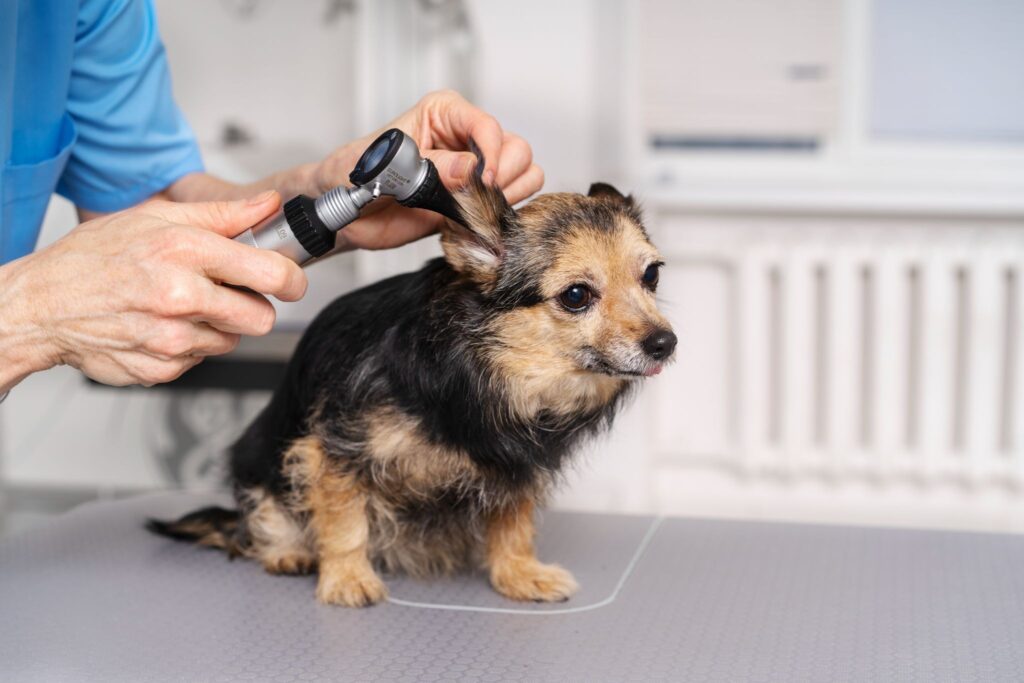
A veterinary exam typically starts with a look inside the ear canal using an otoscope to check for redness, swelling, discharge, or any visible damage to the eardrum. In many cases, a small sample of the discharge is examined under a microscope to confirm whether yeast, bacteria, or both are present.
This step matters more than it might seem, since treating a yeast infection with a medication meant for bacteria, or the other way around, often does not resolve the problem and can prolong a dog’s discomfort. A quick look under the microscope takes only a few minutes but gives the veterinary team the specific information needed to choose the right treatment the first time.
Cleaning and Medication
Once the type of infection is identified, treatment usually involves a thorough ear cleaning followed by a prescribed medication tailored to the specific organism involved. Your veterinarian will show you how to safely clean and medicate your dog’s ears at home, since technique matters and improper cleaning can sometimes make irritation worse rather than better.
Most dogs need consistent treatment over a period of time to fully clear an infection, even if the symptoms seem to improve after just a few days. Stopping medication early, once a dog appears more comfortable, is one of the more common reasons an infection returns shortly after treatment seemed to be working.
Addressing the Underlying Cause
Treating the infection itself is only part of the picture, especially for dogs who develop ear infections repeatedly. If allergies are the underlying trigger, your veterinary team may recommend additional steps, such as dietary changes or ongoing allergy management, to reduce how often infections come back.
For dogs prone to moisture-related infections, a veterinarian might also suggest a regular ear-drying routine after swimming or bathing, along with periodic at-home checks to catch early irritation before it develops into a full infection. Building this kind of routine care into a dog’s regular grooming habits can meaningfully cut down on how often ear problems come up in the first place.
When Dog Ear Infections Need Veterinary Care
- A dog who is shaking their head persistently or scratching at an ear to the point of causing visible irritation should be seen rather than monitored at home.
- Any noticeable discharge, odor, or swelling inside the ear is a clear sign that a veterinary exam is needed.
- A dog who seems painful when their ear is touched, or who resists having their head handled at all, should not wait for a routine appointment.
- Ear infections that keep coming back, even after treatment, deserve a deeper conversation about what might be driving them.
Summit offers same- and next-day appointments for dogs showing these signs, so ear discomfort does not have to linger longer than necessary.
How Summit Supports Dogs With Ear Infections
A dog ear yeast infection or bacterial infection is diagnosed and treated through Summit’s dermatology services, which cover the skin, coat, and ear conditions that so often overlap with one another. Because ears and skin are closely connected, a dog with recurring ear issues is often examined for underlying allergies or other skin conditions at the same visit.
For more complex or persistent cases, the team may also draw on broader dermatology care to identify and manage the deeper cause rather than only treating each flare-up as it comes. Whether your dog is dealing with a first-time infection or a pattern that keeps recurring, the goal is always the same: identify what is actually happening and build a plan that keeps your dog comfortable.
Diagnostic tools like microscope evaluation of ear discharge are available on-site, which means a dog showing signs of an ear infection can often be examined, diagnosed, and started on treatment in a single visit rather than waiting on results from an outside lab. For dogs with a longer history of ear issues, the veterinary team can also look at patterns over time to figure out whether allergies, anatomy, or another factor is the real driver.
Families who are exploring Summit as a new patient after noticing their dog’s ear discomfort are welcome to bring any history or previous treatment information along, since that context can help the veterinary team get to an accurate diagnosis more quickly.
Keeping Your Dog’s Ears Healthy and Comfortable
Ear infections are uncomfortable for dogs and can escalate quickly if left untreated, but they are also one of the more manageable conditions once the right cause is identified and addressed. Knowing what causes ear infections in dogs, and recognizing the early signs, gives you a real head start on keeping your dog comfortable.
With the right combination of treatment and, where needed, ongoing management of an underlying cause like allergies, most dogs go on to feel much more comfortable and spend a lot less time shaking their heads or scratching at their ears.
If your dog is showing signs of an ear infection, Summit Dog & Cat Hospital creates a path to health for you and your pet, from diagnosis through treatment and ongoing prevention. Book a same- or next-day appointment to get your dog’s ears checked and start feeling better soon.
Frequently Asked Questions
Q: What causes ear infections in dogs to keep coming back?
A: Recurring ear infections are often tied to an underlying issue, most commonly allergies, that keeps disrupting the natural balance inside the ear canal. Addressing that underlying cause, rather than only treating each individual flare-up, is usually the key to reducing how often infections return, and your veterinary team can help identify what that underlying trigger actually is.
Q: What are the most common dog ear infection symptoms to watch for?
A: The most common signs include head shaking, scratching at the ear, an unpleasant odor, and visible discharge or redness inside the ear. Behavioral changes, like rubbing the head against furniture or tilting the head to one side, are also common early indicators.
Q: How to tell if a dog has an ear infection versus just needing a routine cleaning?
A: A routine buildup of wax usually does not come with odor, redness, or obvious discomfort, while an infection typically involves at least one of those signs along with more noticeable scratching or head shaking. When in doubt, a quick veterinary exam can confirm which one you are dealing with.
Q: Can a dog ear yeast infection go away without treatment?
A: It is unlikely to fully resolve on its own, and delaying treatment often allows the infection to spread deeper into the ear canal, making it more uncomfortable and harder to treat. Prompt treatment tends to lead to a much smoother, faster recovery, and it also lowers the chance that the infection spreads or becomes a chronic, recurring problem.
Q: When does an ear infection become urgent enough for same-day care?
A: An ear infection becomes more urgent when a dog shows significant pain, swelling, or a sudden head tilt, or when discharge and odor appear rapidly rather than gradually. Summit offers same- and next-day appointments so dogs showing these signs can be seen quickly rather than waiting.