
A door left open for ten seconds. A gate latch that did not catch. A leash that slipped during a thunderstorm. Most pets who go missing do so in ordinary circumstances rather than dramatic ones.
When that happens, the difference between a pet who comes home and one who does not often comes down to a piece of technology about the size of a grain of rice. Yet many owners are unclear on what it actually does. Some believe it tracks location. Others assume it works automatically once implanted.
This guide explains how do pet microchips work in practical terms, what happens during the implant appointment, and why the registration step matters more than the chip itself. If you want to arrange the procedure, you can read about our microchipping services.
What a Pet Microchip Actually Is
Microchips for pets are small electronic identification devices implanted under the skin. Each one measures roughly 12 millimeters long and 2 millimeters wide. There is no battery and there are no moving parts.
The chip holds one thing only: a unique identification number. It does not store your name, your address, or your pet’s medical history. That number is the key to a database record where your contact details live. Our earlier article on the importance of microchipping covers why that single number carries so much weight.
What Is Inside the Device
Three components sit inside a biocompatible glass capsule. The first is the microchip itself, which stores the identification number. The second is a copper antenna coil that receives radio energy from a scanner and transmits the number back. The third is the glass casing, often coated with a material that encourages surrounding tissue to anchor the device in place.
Because there is no power source, the device has no expiry date. It is designed to remain functional for the life of the animal.
What a Microchip Is Not
This is the single most common misunderstanding. A microchip is not a tracking device. It cannot tell you where your pet is. It has no GPS, no cellular connection, and no ability to transmit anything unless a scanner is held directly against it.
A microchip is a permanent form of identification, not a location service. That distinction matters when you compare it to the alternatives.
How It Compares With Tags and Trackers
A collar ID tag is the fastest route home when it works. Any neighbor can read it and call you within minutes. Its weakness is that it can fall off, and engraved text wears down over years until it becomes unreadable.
A GPS tracker is the only one of the three that shows live location. It needs charging, usually requires a subscription, and hangs from a collar that can come off during exactly the kind of scramble that causes a pet to go missing.
A microchip cannot be lost or removed, needs no power, and stays readable for the animal’s entire life. Its weakness is that it only works once someone with a scanner has the pet in hand, and only if the record behind the number is registered and current.
These three tools solve different problems. A tag helps a neighbor return your dog in ten minutes. A tracker helps you find a pet who is still nearby. A chip helps a shelter three states away identify a pet who arrived with no collar at all. Using more than one is sensible.
How the Technology Works
When owners ask how do pet microchips work, the answer comes down to a brief exchange of radio energy. Understanding the mechanism makes the limitations easier to accept and the registration step easier to remember.
Passive RFID Explained
Microchips use passive radio frequency identification, usually shortened to RFID. Passive means the device has no internal power.
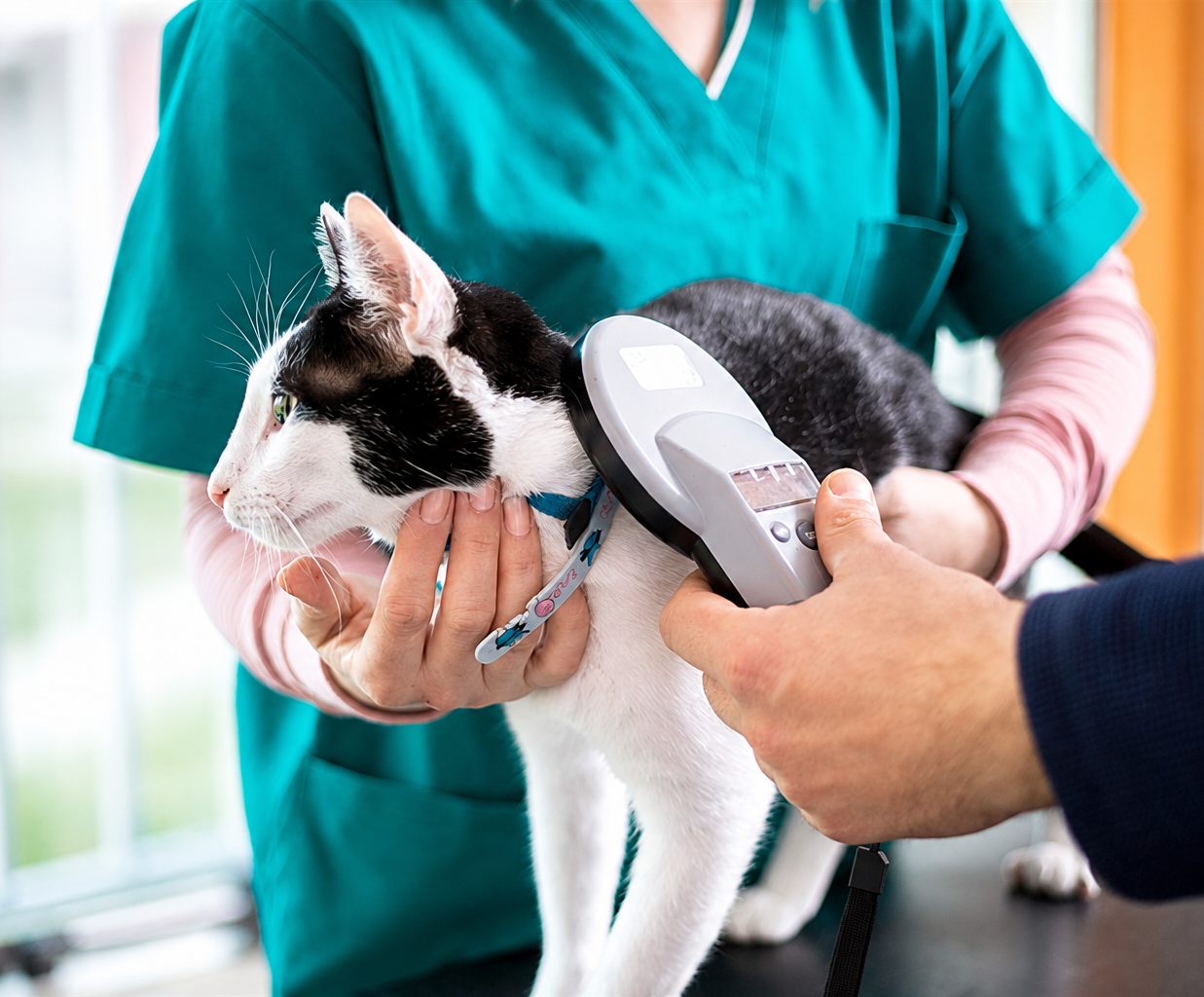
A scanner is passed over the pet and emits a low frequency radio signal. That signal induces a small electrical current in the chip’s antenna coil. The current briefly powers the chip, which transmits its identification number back. The scanner then displays the number, typically nine, ten, or fifteen digits.
The chip is inert the rest of the time. It sits under the skin doing nothing at all until a scanner passes within a few inches.
Frequencies and Universal Scanners
Not all chips broadcast on the same frequency. Three are in circulation. The current default is 134.2 kHz, which follows the ISO 11784 and 11785 international standards and is required for most international travel. Two older proprietary formats, 125 kHz and 128 kHz, remain in pets chipped before the ISO standard was widely adopted.
For a period, a scanner tuned to one frequency could miss a chip broadcasting on another. Pets were occasionally declared unchipped when they were not.
Universal or forward and backward reading scanners resolved this. They cycle through all three frequencies. Nearly all shelters and veterinary practices now use them, so an older chip is still readable today.
Why a Chip Is Sometimes Missed
Even with good equipment, scanning can fail, and the usual reasons are practical rather than technical. A chip that has migrated slightly will be missed if only the shoulder area is checked. A scan performed too quickly can also miss it, since a proper scan covers the whole body in a slow S shaped pattern.
Physical interference accounts for most of the rest. Thick fur, a heavy collar, or a metal surface underneath the animal can all disrupt the reading. A pet who is too tense to hold still for a complete pass presents the same problem.
This is why asking for a scan at each routine wellness exam is worth doing. It confirms the chip is present, readable, and still where it should be.
What the Implant Appointment Involves
The procedure is brief and requires no preparation from you. Most pet microchipping services take only a few minutes from arrival to completion.
Where the Chip Is Placed
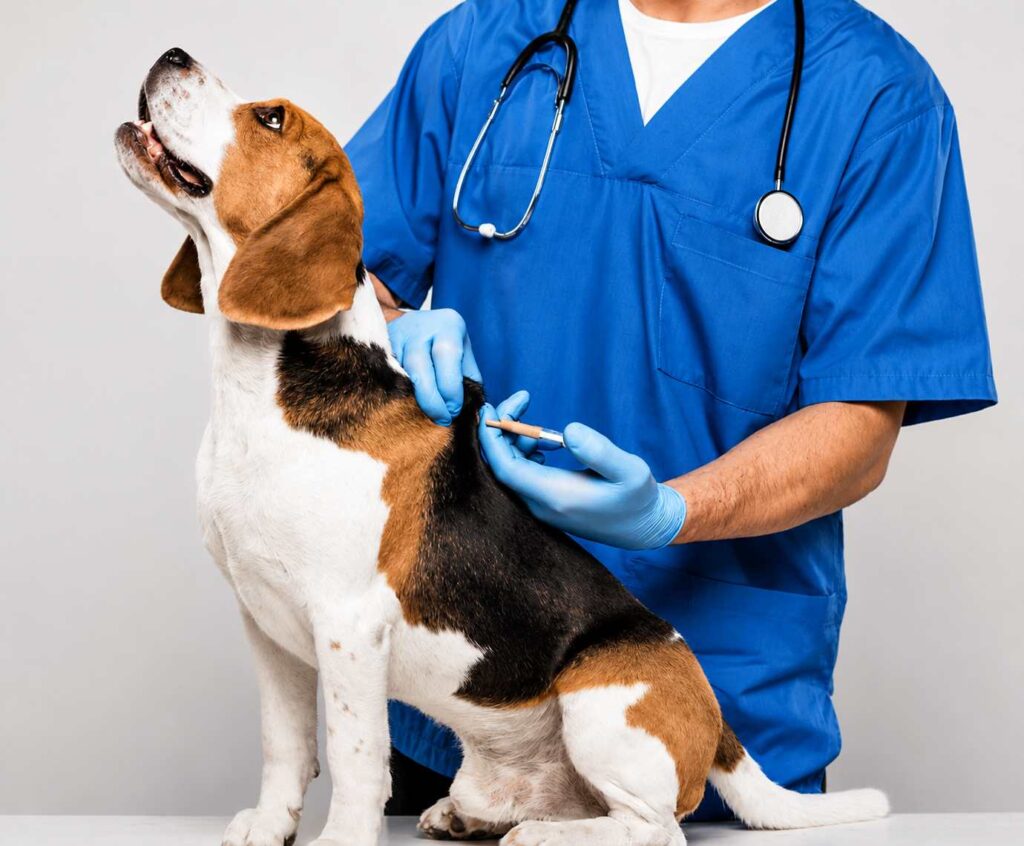
In dogs and cats the standard site is under the skin between the shoulder blades. The chip is injected into the loose subcutaneous tissue just below the surface. It does not enter muscle or any organ.
Standardizing the location matters. Anyone scanning a stray animal starts at the shoulders because that is where the chip is expected to be.
Does It Hurt
The needle is slightly wider than one used for vaccination, so most pets react in a similar way. Many do not respond at all. Some give a brief flinch. The whole process takes a few seconds and requires no anesthesia, no stitches, and no recovery period.
Your pet can eat, walk, and play normally immediately afterward.
When to Have It Done
There is no strict age requirement beyond being large enough for the implant, which most puppies and kittens reach by around eight weeks.
Many owners combine it with an appointment already scheduled. Common pairings include a puppy or kitten wellness visit, a vaccination appointment, or spay and neuter surgery. Since a pet under anesthesia feels nothing at all, the surgical option appeals to owners concerned about the needle.
Aftercare
There is very little to do. Check the site for a day or two for swelling or discharge, which is uncommon. Avoid bathing for 24 hours. A short follow up visit is usually arranged to confirm the chip is sitting correctly and that your pet has settled.
Registration Is the Step That Makes It Work
A chip that has never been registered returns a number and nothing else. The shelter scanning your pet sees fifteen digits with no record attached. From their position, the pet is unidentified.
This is where pet microchipping most often fails, and it has nothing to do with the technology.
How Registries Work
The manufacturer or the implanting clinic supplies a registration form or an online enrollment link. You create a record linking the chip number to your contact information.
Several registries operate nationally, and different manufacturers default to different ones. The important point is that your number is registered somewhere and that the record is accurate.
The Universal Lookup Tool
Shelters use a free universal pet microchip lookup service maintained by the American Animal Hospital Association. Entering a chip number identifies which registry holds the record. It does not display your details, only where to search next.
This works well provided the record exists. It cannot help with a number that was never enrolled.
Details Worth Keeping Current
Detail |
Why It Matters |
When to Review |
| Primary phone number | The most common single point of failure. Disconnected numbers strand otherwise identifiable pets. | Any time your number changes |
| Secondary contact | Reached when you are traveling, hospitalized, or unreachable | Once a year |
| Email address | Registries send renewal notices and alert messages here | Once a year |
| Home address | Helps a shelter judge how far the pet has traveled | Every move |
| Pet description and photo | Confirms identity at pickup and helps if the chip cannot be read | After significant changes in appearance |
| Veterinary clinic on file | A reliable backup contact who can reach you | Once a year |
Set a reminder to review the record once a year. Pairing it with the annual checkup works well since you are already thinking about your pet’s records.
What Happens When a Lost Pet Is Found
Knowing the process clarifies why each step above matters. A stray pet is brought to a shelter, animal control facility, or veterinary clinic. Staff scan the whole body with a universal scanner. A number is found and entered into the universal lookup tool, which identifies the relevant registry. The registry is contacted, the owner’s details are retrieved, and the owner is called.
Each link depends on the one before it. A missing registration or an old phone number breaks the chain at the final stage, after everything else has gone right.
What the Research Shows
A study published in the Journal of the American Veterinary Medical Association reviewed more than 7,700 stray animals across 53 shelters. Microchipped dogs were returned to their owners 52.2 percent of the time, against an overall return rate of 21.9 percent for stray dogs. For cats the difference was far larger. Microchipped cats were returned 38.5 percent of the time, compared with 1.8 percent overall.
That gap for cats is striking. Cats are less likely to wear collars and less likely to be recognized by neighbors, which leaves the chip as the primary route home.
The same study identified why some microchipped pets were not reunited. The leading causes were incorrect or disconnected phone numbers and chips that had never been registered. The technology performed. The record did not.
Common Concerns and Misunderstandings
Can a Chip Move Around the Body?
Minor migration happens, usually a short distance down a shoulder or toward the chest. It is not harmful. It matters only if someone scans one small area rather than the whole animal, which is why a full body scan is standard practice.
Is There a Cancer Risk?
Tumors at implant sites have been documented in laboratory rodents and reported in a very small number of dogs and cats worldwide, against many millions implanted. Veterinary organizations consider the risk extremely low and far outweighed by the benefit.
Can Someone Track My Pet Through the Chip?
No. The chip only responds to a scanner held within a few inches of it. It has no transmitter of its own and no connection to any network.
My Cat Never Goes Outside, So Why Bother?
Indoor cats escape during moves, deliveries, contractor visits, and emergencies. They tend to hide rather than approach people, so they are often collected as strays days later with no collar. The return rate data above applies most directly to exactly this situation.
Does a Chip Replace a Collar and Tag?
No. A visible tag lets any neighbor call you within minutes. A chip works when the pet reaches a facility with a scanner. The two cover different scenarios and work best together.
Microchipping Across Different Situations
Puppies and Kittens
Young animals are curious and quick, and they have not yet learned the boundaries of home. Chipping early establishes protection before the highest risk period.
Adopted and Rescue Pets
Most shelters chip animals before adoption, but the record frequently still lists the shelter or a previous owner. Transferring the registration into your name is essential and often overlooked. Our first vet checklist for a rescue pet covers this alongside the other early steps.
If you are unsure whether an adopted pet is already chipped, ask for a scan at the first appointment. Implanting a second chip is not harmful, but it is unnecessary if one is already present.
Senior Pets
Older pets with cognitive decline can become disoriented in familiar surroundings and wander. Age is not a reason to skip the procedure, and the implant is no more demanding for a senior animal than a young one.
Boarding, Grooming, and Travel
Facilities handle animals through doors and gates all day. Many require identification as a condition of admission. If you are arranging boarding for your pet, confirming the registration details beforehand is a sensible precaution.
International Travel
Most countries require an ISO 11785 compliant chip at 134.2 kHz, implanted and recorded before the rabies vaccination that accompanies the travel paperwork. Sequence matters here. A rabies vaccine given before the chip is implanted may not be accepted, which can force a restart of the waiting period.
A Small Step With Long Term Value
Microchips for pets are inexpensive, quick to place, and permanent. They do not require charging, cannot be lost, and stay functional for the animal’s lifetime.
Their limitation is worth restating plainly. A chip cannot find your pet. It identifies your pet once someone else has found them. That is a narrower function than many owners expect, but in the moment it applies, nothing else does the job as reliably.
The practical takeaway is short. Have the chip implanted. Register it the same day. Update the record whenever your phone number changes. Ask for a scan at each annual checkup to confirm it is readable.
To arrange the procedure or have an existing chip scanned, contact Summit Dog and Cat Hospital at (908) 273-2200. Our services can be combined with any visit already on your calendar, and you can request an appointment online.
Frequently Asked Questions
Q: How much does microchipping usually cost?
A: It is one of the lower cost preventive procedures, and the fee is typically a single payment covering the implant. Some registries charge separately for enrollment or premium features. Ask what is included when you book.
Q: Does a microchip need to be replaced over time?
A: No. There is no battery and nothing that wears out, so it should last your pet’s entire life. Having it scanned at each annual visit confirms it is still readable and has not shifted position.
Q: What should I do if I move or change my phone number?
A: Log into your registry account and update the record immediately. This single step is the most common reason chipped pets are not reunited with their owners, and it takes only a few minutes to correct.
Q: Can my pet be microchipped during another procedure?
A: Yes. Many owners schedule it alongside a vaccination visit, a wellness exam, or spay and neuter surgery. Combining it with a procedure under anesthesia means your pet feels nothing during the implant.
Q: How do I find out whether my adopted pet already has a chip?
A: Ask for a full body scan at your next appointment. If a number is found, use the universal lookup tool to identify the registry, then contact them to transfer the record into your name.