
Most owners bring a puppy or kitten in for that first round of shots without giving it much thought beyond checking a box. It is only later, when a neighbor’s unvaccinated dog comes down with parvo or a barn cat turns up with distemper, that the real value of the visit sinks in. Understanding how vaccinations protect dogs and cats helps explain why this is one of the simplest, most effective things an owner can do for a pet’s long-term health.
Vaccines work by teaching the immune system to recognize a threat before the pet ever encounters it in real life. That head start is often the difference between a mild illness and one that requires days of hospitalization, or worse. For diseases core vaccines like parvovirus, distemper, and feline panleukopenia, a fully vaccinated pet’s immune system usually stops the infection long before it becomes dangerous.
This guide walks through how vaccinations protect dogs and cats at a cellular level, which vaccines most pets need, what actually happens during a vaccination visit, and why a single round of puppy or kitten shots is not the end of the story.
How Vaccinations Protect Dogs and Cats From Disease
A vaccine contains a small, modified piece of a virus or bacteria, enough for the immune system to study it without ever causing the actual disease. The immune system responds by building antibodies and memory cells specifically trained to recognize that pathogen. If the real virus or bacteria ever shows up later, the body already knows how to fight it off, often before the pet shows any symptoms at all.
This is why timing matters so much for young animals. Puppies and kittens are born with some temporary immunity passed down through their mother’s milk, but that protection fades gradually over the following weeks. A series of early vaccinations closes the gap as the natural immunity wears off, so there is no window where a young, still-developing immune system is left unprotected.
Adult dogs and cats keep their vaccine-trained immunity for a meaningful stretch of time, but that protection is not permanent. The immune system’s memory of a particular vaccine gradually weakens, which is the reason booster visits stay part of a pet’s care for life rather than stopping after the first year.
Which Vaccines Dogs and Cats Typically Need
Every new patient exam at Summit includes a conversation about which vaccines make sense for that specific pet, since a housebound senior cat and an outdoor-roaming young dog face very different exposure risks. A dog who travels to a groomer, boarding facility, or dog park regularly needs a different plan than one who mostly stays in a fenced yard, and the same logic applies to cats who spend any time outdoors versus cats who never leave the house. Broadly, dog vaccinations and cat vaccinations fall into two groups.
Core Vaccines Nearly Every Pet Needs
Core vaccines protect against diseases that are widespread, highly contagious, or serious enough that every dog or cat benefits from protection regardless of lifestyle. For dogs, this typically includes rabies, distemper, parvovirus, and adenovirus. For cats, it usually includes rabies, feline panleukopenia, feline herpesvirus, and calicivirus. Rabies vaccination is also legally required in New Jersey, since the disease is fatal and transmissible to people.
Non-Core Vaccines Based on Lifestyle
Non-core vaccines are recommended based on a pet’s actual exposure risk rather than given to every patient automatically. A dog who visits the dog park, goes to boarding or daycare, or spends time around other dogs is often a good candidate for the Bordetella and canine influenza vaccines. An outdoor or indoor-outdoor cat that might encounter other cats is frequently a candidate for the feline leukemia vaccine, particularly while young.
Vaccine Type |
What It Protects Against |
Typically Recommended |
| Rabies | A fatal virus that spreads through bites and is transmissible to people | All dogs and cats, required by New Jersey law |
| Distemper and parvovirus | Severe, often fatal viral illnesses affecting the gut, lungs, and nervous system | All dogs, especially puppies |
| Feline panleukopenia | A highly contagious virus that attacks the intestines and immune system | All cats, especially kittens |
| Bordetella | A bacterial cause of kennel cough that spreads easily between dogs | Dogs in boarding, daycare, or group settings |
| Feline leukemia | A virus spread between cats that weakens the immune system over time | Cats with outdoor access or exposure to other cats |
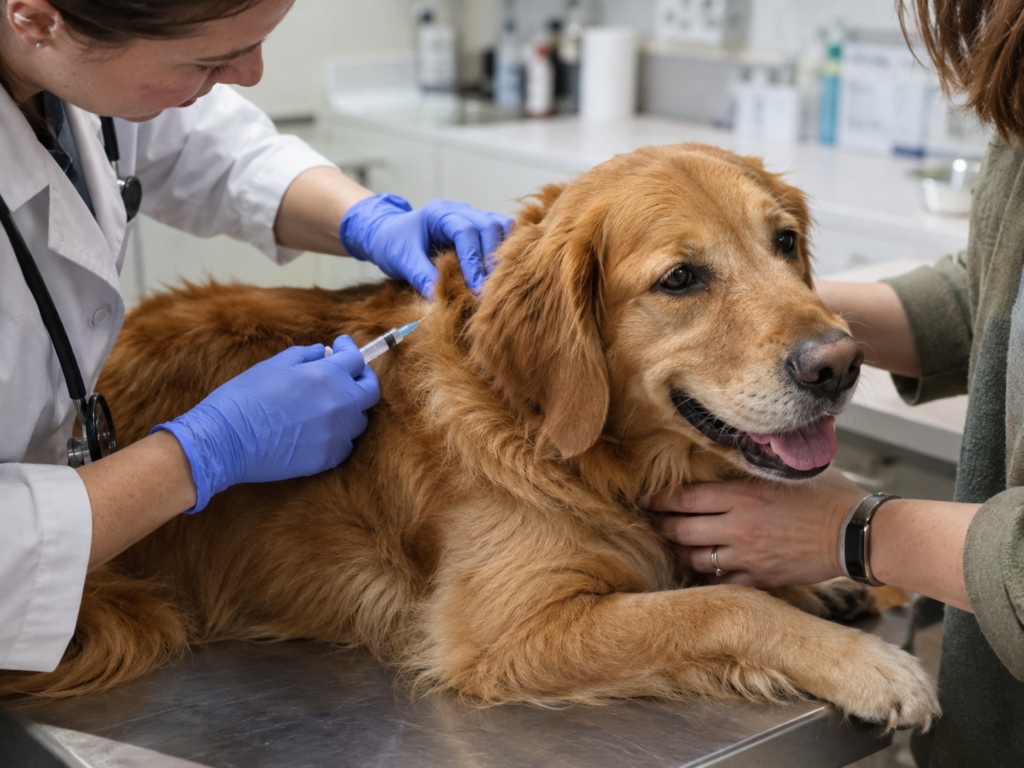
What Happens During a Vaccination Visit
A vaccination appointment is usually brief, but a good one involves more than just the injection itself.
- A veterinary team member reviews the pet’s health history, lifestyle, and any recent changes in behavior or appetite before deciding which vaccines are appropriate that day.
- The veterinarian performs a physical exam first, since a vaccine is only given to a pet who is healthy enough to receive it.
- Each vaccine is given as a quick injection, usually in the scruff or a leg, and most pets barely react beyond a brief pinch.
- The team watches the pet for a short period afterward, since mild reactions like tenderness at the injection site or brief tiredness are common and usually resolve within a day.
- Before the visit ends, the next recommended vaccines are discussed so the plan carries forward smoothly rather than being reconstructed from scratch at the following visit.
Most pets tolerate the visit well, and combining vaccines with an already-scheduled wellness exam means fewer separate trips for the owner and one consistent record of the pet’s overall health.
Why Booster Vaccines Still Matter
It is a common misconception that a puppy or kitten’s early vaccine series covers a pet for life. In reality, immunity built by a vaccine fades gradually, at a different pace for each disease and each individual animal. Booster vaccines exist to catch that decline before it leaves a gap in protection.
Puppies and Kittens Building Initial Immunity
Young animals need a series of vaccines spaced several weeks apart rather than a single shot, because maternal antibodies inherited at birth can interfere with a vaccine’s effectiveness if given too early. Spacing the series out ensures at least one dose lands after that maternal protection has faded, so the immune system actually builds its own lasting response.
Adult and Senior Pets Maintaining Protection
Once a pet reaches adulthood, boosters shift from building initial immunity to renewing it. How often a given booster is needed depends on the specific vaccine, the pet’s health, and their ongoing exposure risk, which is why this is reassessed at regular visits rather than treated as a one-size-fits-all rule. Senior pets in particular benefit from this ongoing review, since senior pet care often involves other health changes worth weighing alongside the vaccine plan.
Skipping a booster is different from simply being a little late for one. A pet who misses a booster by a few weeks usually just needs the next dose to get back on track. A pet who goes years without one may have let their protective antibody levels drop low enough that part of the original series needs to be repeated, since the immune system’s memory of a vaccine does eventually fade past the point of a quick top-up.
Titers as an Alternative Way to Check Immunity
For some adult pets and some vaccines, a veterinarian may recommend a titer test instead of automatically re-vaccinating on a fixed timeline. A titer measures the actual level of protective antibodies still circulating in a pet’s blood, which gives a direct answer to whether that particular vaccine’s protection is still holding up rather than assuming it has worn off.
Titers are most commonly used for core vaccines like distemper and parvovirus in dogs, or panleukopenia in cats, in pets with a known reaction history or in older pets where an owner wants to avoid an unnecessary booster. They are less useful for rabies, since New Jersey law requires vaccination on a set interval regardless of titer results, and they are generally not used in place of the initial puppy or kitten series, when building that first layer of immunity matters more than confirming an existing one. A veterinarian can help decide whether a titer makes sense for a specific pet or whether a straightforward booster is the more practical choice.
Are Vaccines Safe for Dogs and Cats
Vaccines go through extensive testing before they reach veterinary clinics, and adverse reactions are uncommon. Most pets experience nothing more than mild soreness at the injection site, brief low energy, or a slightly reduced appetite for a day. These effects reflect the immune system doing exactly what the vaccine asked it to do.
True allergic reactions, such as facial swelling, hives, or vomiting shortly after a vaccine, happen far less often, but they are taken seriously when they do occur. A pet with a known history of a reaction can often still be vaccinated safely with adjustments, such as spacing vaccines further apart or giving them under closer observation. Owners should never assume a pet cannot be vaccinated again after a mild reaction without discussing it with a veterinarian first, since the disease a vaccine prevents is almost always the greater risk.
For most dogs and cats, the small, temporary discomfort of a vaccine appointment is a reasonable trade for avoiding a disease that could otherwise mean weeks of hospitalization or worse. Veterinarians weigh this trade-off individually for pets with health conditions that complicate vaccination, such as ongoing chemotherapy or a severe autoimmune disorder, rather than applying a blanket rule to every patient.
Signs Your Pet’s Vaccine Plan May Need a Review
A vaccine plan is not something to set once and forget. Life changes for a pet just as often as it does for the people caring for them, and a plan built around last year’s routine does not always fit this year’s reality. A few situations are worth bringing up at the next visit rather than waiting for the annual reminder.
- A pet whose lifestyle has changed recently, such as a new daycare routine, a move to an area with more wildlife, or new exposure to other animals, may need vaccines that were not necessary before.
- A pet who is overdue on a booster by more than a few months may need to restart part of the original series rather than simply resuming where they left off.
- A senior pet managing a chronic illness may need their vaccine plan adjusted rather than skipped entirely, since some conditions change which vaccines make sense and when.
- A pet with a history of a reaction to a previous vaccine should have that reaction discussed and documented so future visits can plan around it.
- A pet adopted as an adult with an unclear vaccine history usually benefits from starting fresh with a standard series rather than guessing at what they may have already received.
None of these situations means a pet has to start over from nothing, but each one is a reason to talk with a veterinarian rather than assume the existing plan still fits.
How Summit Supports Vaccination Care for Dogs and Cats
Building the right vaccine plan takes into account a pet’s age, health history, and day-to-day lifestyle, not a generic checklist applied the same way to every patient. The team at Summit Dog and Cat Hospital works through that plan with owners at every stage, from a puppy or kitten’s first series through the ongoing boosters that keep an adult or senior pet protected. That conversation also covers practical questions owners often have, like how a new puppy’s vaccine timeline fits around socialization, or how a senior cat’s plan should shift once other health conditions enter the picture. Same- and next-day appointments make it easier to stay on track even when a booster visit needs to move around a busy schedule, and pairing a vaccine visit with a routine wellness check means fewer separate trips for owners juggling more than one pet’s care. If your dog or cat is due for vaccines or you are simply not sure what they need next, book an appointment online and the team will help you build a plan that fits your pet.
Sources
American Animal Hospital Association, 2022 AAHA Canine Vaccination Guidelines (2022, updated 2024). Professional veterinary guidelines. Supports these points: vaccines are split into core and lifestyle based groups, rabies, distemper, parvovirus and adenovirus are core for dogs, Bordetella and canine influenza depend on the dog’s risk, maternal antibodies affect the puppy series, and titers can be used to check immunity.
American Association of Feline Practitioners, 2020 AAHA/AAFP Feline Vaccination Guidelines (2020). Professional veterinary guidelines. Supports these points: cat vaccines are split into core and lifestyle based groups, each cat’s age, environment and lifestyle shape its plan, and the guidelines also cover vaccine reactions and how to record each vaccination.
New Jersey Department of Health, Policies and Guidelines for Animal Rabies Vaccination (2017). State government health department. Supports these points: New Jersey sets the rabies vaccination schedule for dogs and cats, sets how overdue pets are boostered, and does not consider young or newly vaccinated pets protected.
Frequently Asked Questions
Q: How vaccinations protect dogs and cats from serious illness?
A: Vaccines expose the immune system to a small, harmless piece of a virus or bacteria, which trains the body to recognize and fight the real disease quickly if it is ever encountered. This head start often stops an infection before it becomes severe, which is why vaccinated pets rarely develop the serious illnesses these vaccines target. It is one of the few preventive tools in veterinary medicine that works before a problem ever starts rather than treating it after the fact.
Q: What vaccines does my puppy or kitten need first?
A: Most puppies and kittens start with a series of core vaccines, including distemper and parvovirus for dogs or panleukopenia for cats, along with rabies once they reach the appropriate age. The exact combination depends on the pet’s age at the first visit and any local requirements.
Q: How often do adult dogs and cats need booster vaccines?
A: It depends on the specific vaccine, the pet’s health, and their lifestyle, which is why a veterinarian reassesses the plan at regular visits rather than applying the same interval to every pet. Some boosters are needed more frequently than others based on how long that particular vaccine’s protection tends to last.
Q: Can an adult pet with an unknown vaccine history still get vaccinated safely?
A: Yes. When a pet’s history is unclear, veterinarians typically start with a standard series as though the pet had never been vaccinated, which safely rebuilds protection without any real risk from the extra doses.
Q: Are there side effects from dog or cat vaccinations?
A: Most pets experience only mild, short-lived effects such as soreness at the injection site or brief tiredness. True allergic reactions are uncommon, and a pet with a history of one can often still be vaccinated safely with precautions in place.