
Hearing that your pet needs part of a bone removed is unsettling. Most owners react to the description before they understand the outcome, and the procedure sounds far more drastic than the recovery usually is.
Femoral head ostectomy, almost always shortened to FHO, is one of the more counterintuitive procedures in veterinary orthopedics. It removes part of the hip joint rather than repairing it. Pets who have spent months limping frequently walk more comfortably within weeks of the operation.
This guide explains what is FHO surgery in practical terms, why it is recommended, what recovery looks like week by week, and what mobility to expect afterward. You can also read more about our FHO surgery service.
What the Procedure Actually Involves
The hip is a ball and socket joint. The ball is the femoral head, which sits at the top of the thigh bone. The socket is the acetabulum, a cup in the pelvis. In a healthy animal the two surfaces glide smoothly against each other, separated by cartilage and lubricated by joint fluid.Pain arises when those two surfaces no longer fit or move correctly. Bone grinding against bone produces significant discomfort with every step.
Removing the Source of Contact
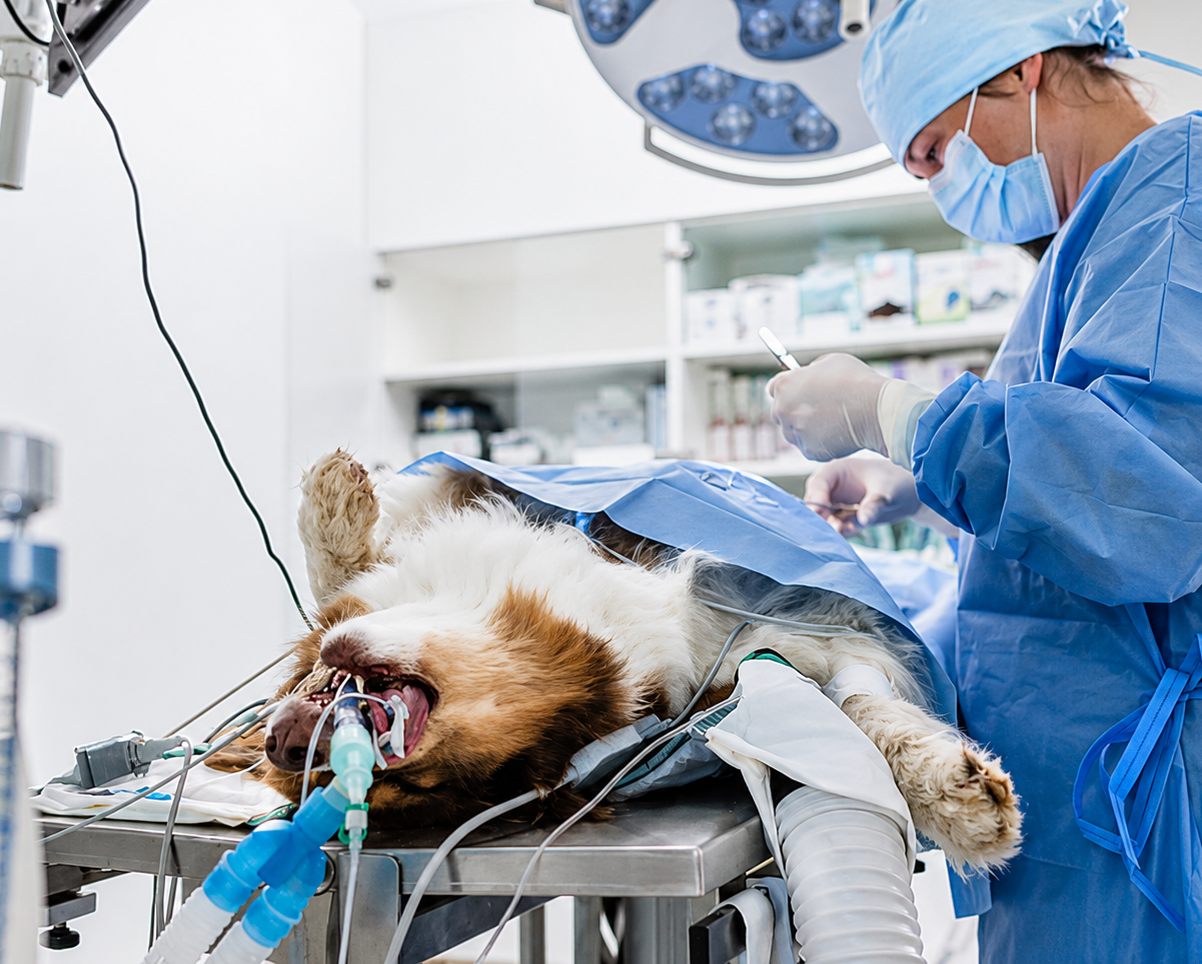
FHO takes away the ball. The surgeon removes the femoral head and the neck of the femur that supports it, leaving the socket empty. With nothing to grind against the pelvis, the source of pain is gone. It is one of the more established procedures withinpet orthopedic surgery.The obvious question is what holds the leg on afterward. The answer is the surrounding muscle, which in the hip region is substantial. The thigh and gluteal muscles are strong enough to keep the limb in position and functional.
How the False Joint Forms
Over the weeks following surgery the body fills the space with fibrous scar tissue. This becomes what is called a pseudoarthrosis, or false joint. It is not cartilage and it does not behave like a true joint, but it provides a cushioned connection that allows the leg to move without bone contact.This is why early controlled movement is encouraged after FHO rather than restricted. Using the limb shapes the false joint correctly and prevents the muscle loss that would otherwise limit function.
When the Procedure Is Recommended
FHO is described as a salvage procedure. That term means it is chosen when the joint cannot be preserved, not when it can be repaired. Our guide to common orthopedic conditions covers the broader range of problems that affect these joints.
Legg-Calve-Perthes Disease
This condition appears in small breed dogs, typically between four and twelve months of age. Terriers, Poodles, and Pugs are among the breeds seen most often. The blood supply to the femoral head fails, causing the bone to soften and collapse.Puppies present with progressive lameness on one hind leg and noticeable muscle wasting on that side. The damaged head cannot be salvaged, so removing it ends the pain. Young patients tend to recover quickly.
Severe Hip Dysplasia
In dysplasia the ball and socket fit poorly, and the resulting instability produces chronic arthritis. Not every dysplastic hip requires surgery. Many pets do well for years on weight management, medication, and rehabilitation.FHO enters the discussion when that approach no longer controls the pain. At that point the goal shifts from preserving the joint to eliminating the bone on bone contact.
Fractures and Dislocations
Fractures of the femoral head or neck sit in a location with poor blood supply, which means a plated repair often fails to heal reliably. FHO avoids a repair that is likely to break down later.Chronic hip luxation is treated the same way. When a hip repeatedly dislocates and cannot be kept in place, removing the unstable joint is more durable than repeated attempts to reduce it. The same logic applies when an earlier surgical fixation has failed.
Cats
Feline FHO surgery is most often performed after trauma, particularly road accidents that cause femoral head fractures or hip dislocation. Cats tolerate the procedure exceptionally well. Their light frame and natural agility mean many return to near normal function, including jumping.
Before the Procedure
Diagnostics
Radiographs confirm the diagnosis and show the state of both hips. Comparing sides matters, since bilateral disease changes the plan. Digital radiology provides the detail needed to assess the femoral head and the socket.Pre anesthetic bloodwork checks organ function and identifies anything that would alter the anesthetic protocol. This is standard before all pet surgeries and is particularly relevant for older patients.
Preparing at Home
Your clinic will provide specific instructions, which usually include the following:
- Withhold food from a set time the evening before, while allowing water until the morning
- Continue or pause current medications only as directed, since some anti inflammatories are stopped beforehand
- Set up a confined recovery area with non slip flooring before the day of surgery
- Arrange for someone to be home during the first 48 hours
Our guide onpreparing your pet for orthopedic surgery covers the practical side in more detail.
What Recovery Looks Like
Recovery after FHO differs from most orthopedic procedures in one important way. Movement is encouraged early rather than restricted, because the false joint forms correctly only when the limb is used.
The First 48 Hours
Your pet comes home groggy and sore. Pain medication is given on schedule rather than waiting for signs of discomfort. Most pets barely touch the leg down during this period, which is expected.Cold compressing the hip area for short intervals several times daily helps reduce swelling. An e-collar stays on to prevent licking at the incision.
Weeks One and Two
Toe touching usually begins within the first week. Partial weight bearing typically follows in the second week, though this varies with the pet and the underlying condition.Short leash walks of a few minutes, several times a day, are generally recommended from early on. The purpose is not exercise. It is encouraging the limb to bear load in a controlled way.
Incision Care
Check the incision twice daily. Mild bruising and slight swelling are normal in the first few days. Contact the clinic if you see increasing redness, discharge, heat, gaping, or if your pet develops a fever or stops eating. Sutures or staples generally come out around ten to fourteen days.
Weeks Three to Six
This is when progress becomes visible. Weight bearing improves steadily and the limp softens. Walk duration increases gradually under your veterinarian’s guidance.Muscle mass on the operated side is usually still reduced at this stage. Rebuilding it is the main task of the next phase.
Weeks Six to Twelve
Most pets are using the leg comfortably by this point. Activity restrictions ease progressively, though full return to running and jumping is normally cleared somewhere between three and six months depending on the individual.
Rehabilitation Makes the Difference
Outcome after FHO depends heavily on what happens after the operation. Two pets with identical surgeries can end up in very different places based on rehabilitation.
Passive Range of Motion
Gentle flexion and extension of the hip while your pet is relaxed helps prevent the scar tissue from tightening. Your veterinary team will demonstrate the technique and the appropriate range.
Controlled Leash Walking
Slow, steady walking on a leash encourages even weight distribution. Off leash activity in the early weeks tends to produce short bursts of running on three legs, which does not build the false joint properly.
Adjunct Therapies
Targeted strengthening exercises and cold laser therapy both support recovery. Laser therapy is often used in the early weeks to reduce inflammation and support tissue healing. If a formal rehabilitation program is appropriate for your pet, your veterinarian can advise on what is suitable.
Weighing FHO Against Total Hip Replacement
Total hip replacement is the alternative for some patients, and owners understandably want to know how the two compare once they understand what recovery involves.
| Factor | FHO | Total Hip Replacement |
| What it does | Removes the femoral head and lets scar tissue form a false joint | Replaces the joint with an artificial implant |
| Restores normal mechanics | No | Yes, or close to it |
| Best suited to | Cats and smaller to medium dogs | Larger dogs where full function is the goal |
| Implant complications | None, since nothing is implanted | Possible loosening, infection, or luxation |
| Typical cost | Lower | Considerably higher |
| Availability | Widely performed | Requires a specialist surgeon and facility |
Body weight is the main practical dividing line. FHO has a high success rate in dogs under 45 pounds and in cats of average weight, and it is generally not the first choice for large dogs. Your veterinarian will weigh size alongside activity level, body condition, the state of the opposite hip, and what is practical for your household.
Long Term Outcomes
Most owners want to know what daily life looks like a year later.Cats generally do best. Many owners report that their cat moves normally and jumps without hesitation, and the operated leg becomes difficult to identify by observation alone.Small and medium dogs also tend to do very well. Comfortable walking, running, and stair use are typical outcomes.For dogs above the usual weight range the picture is less predictable, which is why the procedure is generally reserved for smaller patients. Where it is performed on a heavier dog, pain relief is usually good, though a mild limp after heavy exercise or in cold weather can persist. FHO surgery in dogs of any size produces a limb that is slightly shorter than the other, along with reduced hip extension and some permanent muscle asymmetry. These are cosmetic and mechanical trade offs rather than sources of pain.The important measure is comfort. A pet who was limping constantly before surgery and moves freely afterward has gained a great deal, even with a small residual gait difference. Our article on thebenefits of pet orthopedic surgery covers what that change looks like for families.
Restoring Comfortable Movement
FHO sounds more severe than it is. Removing the femoral head eliminates the painful bone contact, and the body replaces it with a fibrous connection that supports normal daily activity.The decision usually comes down to whether the joint can still be preserved. When medical management has stopped working, or when a fracture or dislocation cannot be reliably repaired, the procedure offers a durable solution without implants that can fail later.Recovery asks something of you. Consistent short leash walks, range of motion work, and patience through the first six weeks have a direct effect on the final result. Pets whose owners commit to rehabilitation consistently do better than those left to recover on their own.If your dog or cat has hip pain and you would like to discuss whether this procedure is appropriate, contactSummit Dog and Cat Hospital at (908) 273-2200. You can alsorequest an appointment online.
Frequently Asked Questions
Q: Will my pet walk normally after FHO surgery?
A: Most cats and smaller dogs return to near normal movement. The operated leg is usually slightly shorter, which is a mechanical difference rather than a painful one. Heavier dogs may show a mild limp after strenuous activity.
Q: How long does recovery take?
A: Toe touching often begins within the first week and partial weight bearing by the second. Comfortable everyday use is usual by six to eight weeks, with full clearance for running and jumping between three and six months.
Q: Can both hips have the procedure?
A: Yes. When both hips are affected, surgery is usually staged with several weeks between operations so your pet always has one stronger side to bear weight on during recovery.
Q: Is FHO better than a total hip replacement?
A: Neither is universally better. Hip replacement restores more normal mechanics and suits larger active dogs. FHO involves no implants, costs less, and works very well for cats and smaller dogs. Your veterinarian will advise based on your pet.
Q: What happens if we choose not to operate?
A: Some pets manage on medication, weight control, and restricted activity, particularly if the condition is mild. When bone is grinding on bone, pain generally continues and muscle loss progresses, which makes any later surgery harder to recover from.