
What are the signs of cat allergies? The usual ones are constant scratching, licking or chewing at the fur, red or crusted skin, hair loss, watery eyes, sneezing, and sometimes vomiting or diarrhea. A cat who keeps doing any of these for more than a few days is worth an exam, because the same signs can come from fleas, a skin infection or another illness, and the cause decides what treatment will actually help.
Maybe you have noticed your cat spending more time grooming than napping, or a patch of fur that looks thinner every week. Cats hide discomfort well, so a change in grooming can be the first visible clue that something is bothering them. It is a good reason to look closer without panicking.
This guide covers what owners tend to notice first, the three triggers behind allergic cats, where signs show up on the body, how to tell allergies from look-alike problems, what happens during an allergy exam, why finding the cause takes patience, which signs mean you should not wait, and how Summit helps.
What Are the Signs of Cat Allergies Owners Notice First?
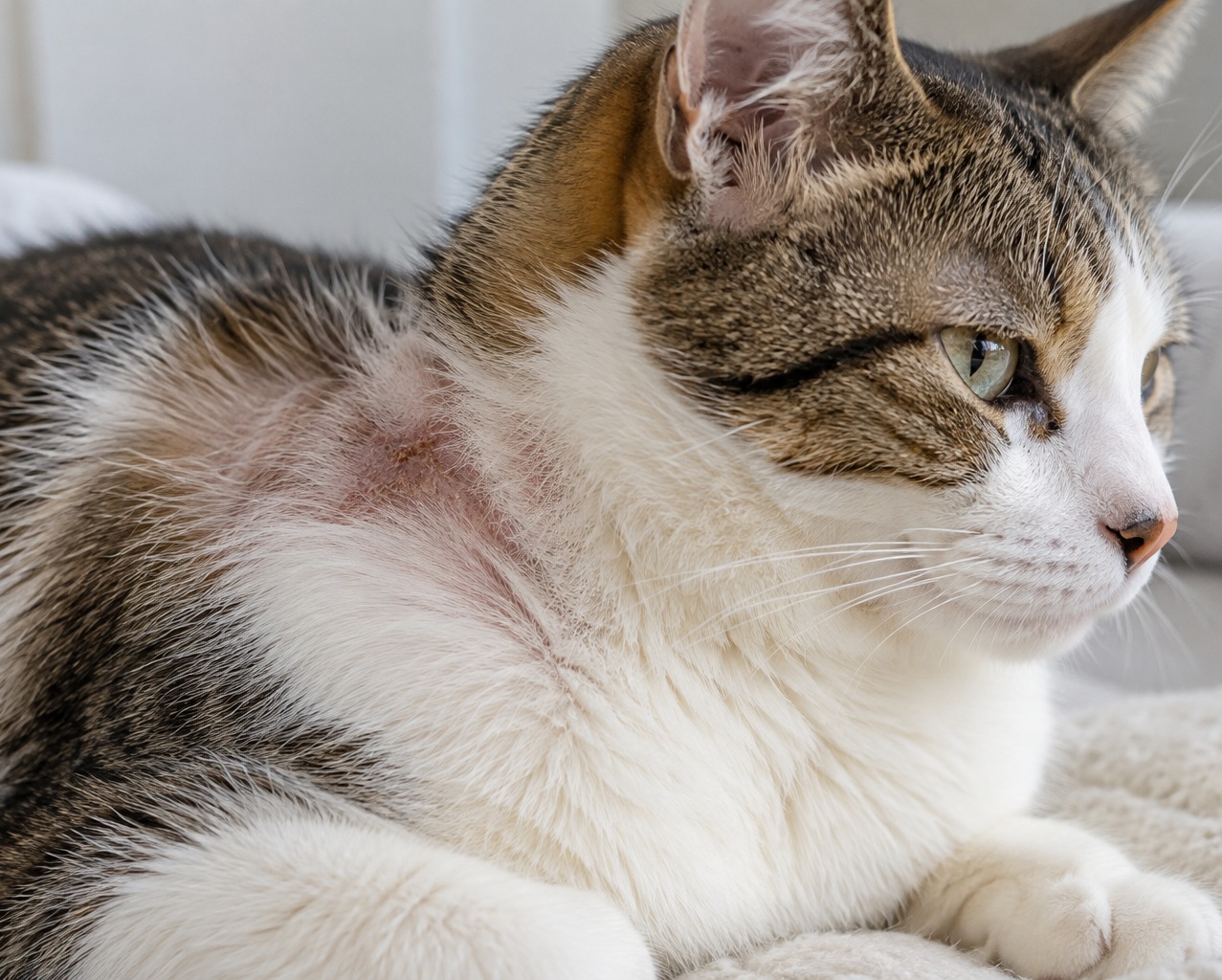
Skin is where allergic cats usually show it. The itch tends to center on the head and neck, and Cornell University’s College of Veterinary Medicine describes small, pale, fluid-filled bumps in that area that a cat scratches open. Once the skin breaks, bacteria move in, and a cat who was merely itchy now has a wound and an infection on top of the allergy. That is why a cat who scratches the same spot for days should not simply be left to see if it passes.
Grooming changes come next. An itchy cat licks, chews and pulls at the fur, sometimes so thoroughly that the coat looks patchy or unkempt. Because cats groom out of sight, you may only find the evidence afterward: fur on the sofa, thin patches along the back, or scabby little crusts you can feel when you pet them.
The second group of signs involves the airways and eyes. Summit’s cat allergies page lists sneezing, coughing, wheezing and itchy or runny eyes, along with vomiting or diarrhea in some cats. Cornell reports that around 10 to 15 percent of cats with a food allergy also have digestive signs, and that when the stomach is involved a cat may start avoiding food and lose weight.
None of these signs is unique to allergies. Wheezing and coughing, for instance, can also come from other airway problems, and vomiting has a long list of possible causes. What points toward allergy is the pattern: signs that persist, that come and go with the season or a change in food, or that settle briefly and then return.
Three Triggers Behind the Itch and How to Tell Them Apart
Cornell calls food allergy the third most common allergy in cats, after flea bites and inhaled substances. That ranking is a useful map of where to look first, because each trigger leaves slightly different clues.
Fleas
Flea allergy in cats is a reaction to flea saliva, not to the flea itself. The Merck Veterinary Manual explains that this saliva contains compounds that provoke an immune reaction, and that the severity ranges from minimal to severe depending on how sensitive the cat is. The lesions favor the lower back, the base of the tail, the back of the thighs, the groin, the head and the neck.
The tricky part is that a cat with flea allergy may have almost no fleas to find. The manual notes that very allergic cats can be nearly flea-free because they groom the evidence away. A cat who lives indoors can still be affected, since fleas arrive on other pets or on people. Summit’s flea and tick prevention page is the place to see how that protection is handled year round.
Food
A food allergy in cats is an immune reaction to certain protein or carbohydrate molecules in ordinary cat food. Cornell notes that nobody knows why it develops, and that it can appear at any age, including in cats who have eaten the same food for years. That detail surprises owners, who assume a long-standing diet must be safe.
The signs can build slowly. Hair loss, a duller coat and persistent scratching may develop over months or longer, which makes it easy to blame age or the season instead of dinner.
The indoor environment
Inhaled particles such as dust or pollen can set off the same itch, and they can also bring on sneezing, coughing and watery eyes. For these cats, Summit’s page suggests more frequent dusting and vacuuming or a special air filter.
Where the Signs Show Up and What They Point To
The table below groups what you might see by body area, with a note on what the vet is likely to check. It is a guide for describing symptoms at the appointment, not a way to diagnose at home.
What you notice |
How it can look |
What the exam looks into |
| Head and neck itch | Scratching at the ears, face and neck, scabs or small crusted bumps | Fleas, food and environmental allergy, secondary skin infection |
| Back, tail base and thighs | Thin patches, crusts along the spine, a ragged coat | Flea allergy first, then other causes of itch |
| Overgrooming | Licking until fur thins, hairballs, bald stripes on the belly or legs | Allergy, parasites, skin infection, and discomfort from other conditions |
| Eyes and airways | Watery or itchy eyes, sneezing, coughing, wheezing | Environmental triggers and other airway problems |
| Stomach | Vomiting, loose stool, eating less, weight loss | Food allergy, along with non-allergic causes |
Itchy Cat or Something Else Entirely?
An itchy cat is not always an allergic cat. Mites, ringworm, a skin infection and even stress-related overgrooming can look similar from across the room, and an allergy can exist alongside any of them. That overlap explains why the exam includes more than a glance at the skin.
The Merck Veterinary Manual describes a useful clue for flea allergy: a cat who responds to flea control is effectively giving the diagnosis. In very sensitive cats, where no fleas can be found, a response to consistent flea prevention serves as the test.
There is also a practical reason not to guess with remedies at home. Summit’s own allergy page advises against giving a cat any medication without veterinary guidance, and for good reason. Cats process some common drugs differently from dogs and people, so a pill that seems mild can be dangerous for them.
What Happens at a Cat Allergy Exam
An allergy visit starts with conversation. The veterinarian reviews the signs, the diet, the home environment and the medical history, and looks over the skin, ears, eyes and coat. Expect questions about what your cat eats, including treats and table scraps, whether other pets or outdoor access are in the picture, and what flea prevention has been used and for how long.
From there, the team works through what Summit’s page describes: flea checks, skin samples, and sometimes bloodwork to rule out infection and parasites. A skin scrape or blood draw may be used to look for certain allergies. For flea allergy specifically, the Merck manual notes that older allergy tests, such as intradermal skin testing and flea-specific blood tests, are no longer recommended, which is another reason the exam depends on history and response to treatment more than on a single lab result.
A fine-toothed flea comb is one of the simplest tools in the room. Flea dirt looks like small reddish-black specks, and when crushed on a damp paper towel it turns reddish-brown, which tells flea droppings apart from ordinary dirt. If a cat has been treated at home and you have spotted any specks, bring a sample.
The food trial
If a food allergy is suspected, a food trial is the way to find out. Cornell describes an elimination diet built around a protein and a carbohydrate the cat has never eaten, such as venison or kangaroo with potato in place of wheat, barley or corn. The trial runs eight to ten weeks, with nothing else to eat but that food and water. If the signs resolve, the original ingredients go back one at a time. When symptoms return within a week or two of a particular ingredient, the culprit is found.
It sounds simple, and it is, but it asks a lot of a household. A single bite of a treat or the neighbor’s leftovers can scramble the result. That is why the vet will want to plan the trial with you before it starts.
Why Finding the Cause Takes Patience
Allergies are managed, not cured. That sentence disappoints people, and it is better to hear it early than to expect a single visit to end the problem. Once a trigger is identified, the work is keeping exposure low: removing the problem ingredient from the diet permanently, keeping flea control steady, and reducing indoor allergens where possible.
Flea allergy shows the scale of that commitment. The Merck manual says that clearing an infestation from the pet and the home can take up to three months, and that prevention is typically lifelong and needs to cover every animal in the household. It also states plainly that anti-inflammatory medication does not substitute for flea control. Relief that arrives in a few days from a medication can disappear when the medication stops if the underlying trigger is still there.
Two things can go wrong with the slow approach. A cat can be stuck in a cycle of itching and infection while everyone waits to see what happens, and a food trial can be run so loosely that it proves nothing. A written plan, which Summit describes providing for allergy patients, keeps both under control.
Mixed triggers are also possible. A cat can be allergic to fleas and to something in the air or the food. Treating one and seeing partial improvement is not a failure of the plan. It is information about what is left to rule out.
Signs That Mean Do Not Wait
A flare-up is usually uncomfortable and not dangerous, but some signs call for a visit soon.
- Open sores, bleeding or a wet, smelly patch of skin suggest a secondary infection that the allergy alone will not clear.
- Wheezing, open-mouth breathing or labored breaths need prompt attention, since breathing trouble is never something to watch and wait on.
- Repeated vomiting or diarrhea, or a cat who stops eating and starts losing weight, may point to a digestive problem that needs a proper work-up.
- Swelling around the face or eyes, or eyes held shut, can signal a painful problem that should be seen quickly.
- Fur loss that keeps spreading, or a cat who seems miserable and cannot settle, deserves an appointment this week and not next month.
If the signs are severe, Summit’s urgent care and emergency care page explains what the hospital can handle. For everything else, same-day and next-day appointments are available, which helps when your cat is scratching through the night.
How Summit Supports Cats With Allergies
The cat allergies service at Summit follows the order described above. The team reviews symptoms, diet, environment and history, checks for fleas, and uses bloodwork or skin samples to separate allergy from infection and parasites. When food is a suspect, it recommends a food trial. Treatment is built around the trigger, with a written set of home-care directions, and may include medication for itch, infection or inflammation under veterinary supervision.
Preventive care is part of the same plan, and Summit’s wellness exams give the team a regular chance to look at your cat’s skin and coat before a small problem becomes a large one. For cats in Summit, Short Hills, Millburn, Livingston, Chatham or nearby, it also means a clinic close enough that a recheck does not become a chore.
Helping Your Cat Feel Comfortable Again
Cat allergies show up as scratching, grooming, skin changes, sneezing, watery eyes and sometimes an upset stomach, and the right fix depends on whether fleas, food or the air in your home is behind it. An exam turns guesswork into a plan you can follow.
If your cat is itching or overgrooming, Summit Dog and Cat Hospital can help you find the trigger. You can book a same-day or next-day appointment online, or call the hospital to talk it through.
Sources
Cornell University College of Veterinary Medicine explains food allergy in cats, its signs, how common it is and how the elimination diet trial works.
Merck Veterinary Manual covers flea allergy dermatitis in cats, including signs, diagnosis and control.
Frequently Asked Questions
Q: What are the signs of cat allergies I should watch for?
A: Watch for constant scratching, overgrooming, thinning fur, red or crusted skin, sneezing, watery eyes and sometimes vomiting or diarrhea. Any of these that lasts more than a few days is worth an exam, since the cause decides the treatment.
Q: How do I know if my itchy cat has a flea allergy?
A: Flea allergy often shows up as crusts and scratching along the back, tail base, thighs and neck, and a cat may have no visible fleas because grooming removes them. Your veterinarian looks for flea dirt, rules out other causes and may use a response to steady flea prevention as the confirmation.
Q: Can a cat suddenly develop a food allergy?
A: Yes. A food allergy can begin at any age, including in cats who have eaten the same diet for years. The way to confirm it is a supervised food trial that runs for several weeks, so please do not switch foods on your own and expect a clear answer.
Q: Is it safe to give my cat human allergy medicine?
A: No. Cats react differently to some common medications, and some that are safe for people can harm them. Please talk with a veterinarian before giving your cat anything for itching or sneezing.
Q: Can I get a same-day appointment at Summit if my cat will not stop scratching?
A: Summit offers same-day and next-day appointments, so your cat can be seen quickly. You can book online or call the hospital, and the team will tell you what is open.